Women numbered about 1.22 million of the 3.4 million US farm producers in the 2022 Census of Agriculture, 36 percent of the total, and 58 percent of all US farms had at least one woman involved in decision-making, per USDA's National Agricultural Statistics Service, released February 13, 2024. About 9 percent of farms were operated primarily by women. The count is a business story, not a profile piece: it maps who signs operating notes, who controls succession, and where the next decade of farm equity lands.
Farm Press Theme publishes information, not financial advice. Every figure below comes from the 2022 Census of Agriculture or named program records, and comparisons across census years carry a caveat: the 2017 census changed how producers are counted, so trend lines before and after are not clean.
What does the census actually count?
A producer, in census terms, is a person involved in decisions for the farm operation, and the 2022 census counted 3.4 million of them across 1.88 million farms. Women's 36 percent share held steady from 2017 to 2022, per NASS, while the total producer count fell with farm consolidation. One more census datum matters for the growth story: about 40 percent of beginning farmers, those with ten or fewer years on any farm, are women, which points the composition of farm operators toward parity in the next generation regardless of what the aggregate count does.
Where are women-led operations concentrated?
The census's female-producer tables show women-operated farms skewing smaller in acreage and numerous in specific enterprises: specialty crops, direct-to-consumer sales, cut flowers, small livestock, and value-added products. That concentration is not a limitation; it tracks where farm revenue per acre is highest and where USDA's own local food and value-added producer grant programs, including the Value-Added Producer Grant program administered by Rural Development, have directed growth capital for years.
What business structures support the growth?
Three structural trends documented in census and program data intersect with women's participation. First, LLC conversion: farms moving from sole proprietorships to LLCs for liability and succession reasons, a shift visible in census legal-arrangement tables across all demographics. Second, succession: with 58 percent of farms counting a woman in decisions, formal succession planning increasingly names daughters and daughters-in-law as operators, not just as land heirs. Third, off-farm income: farm households across the board earn the majority of household income off the farm, and the businesses women operate on-farm often anchor household cash flow in ways that survive commodity cycles.
What funding and program doors are documented?
USDA's Farm Service Agency targets a portion of direct and guaranteed farm ownership and operating loan funds to women and socially disadvantaged farmers under its statutory provisions, and publishes annual program delivery reports on participation. The 2022 census also underpins outreach: USDA's Women in Agriculture policy and programming work cites the same counts used here. At the state level, university extension programs run women-focused farm business courses, from Annie's Project, documented across dozens of land-grant extensions, to state-level financial management intensives.
How does land ownership fit the picture?
Operator counts understate women's control of agricultural assets, because landownership runs ahead of operating. Women outlive male spouses on average and inherit farmland disproportionately in later life, a pattern long documented in agricultural land tenure studies, and female landlords are a significant share of the owners who lease the roughly 40 percent of US farmland that operators rent. That matters for two business conversations: rent negotiations, where the counterparty is increasingly a woman landowner, and succession, where the equity holder and the operator are no longer the same person.
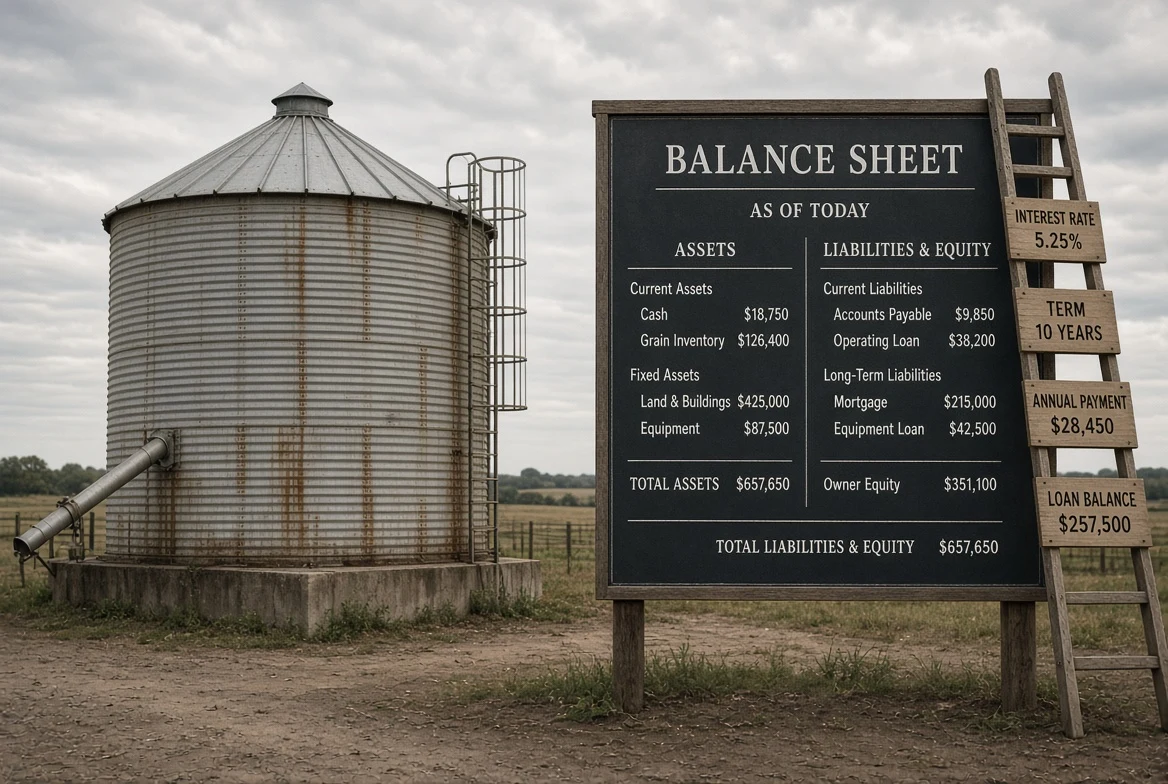
For women-led operations, owned land is also the balance-sheet anchor that lenders price. A beginning operator with a documented operating history plus inherited or purchased equity presents a different credit file than one renting every acre, and the gap compounds over a decade. The planning move that follows from the data is unglamorous: keep titles, LLC agreements, and leases current and in writing, so that ownership built through one generation transfers cleanly to the next rather than dissolving into informal family arrangements that no lender can underwrite.
What should a woman-led farm business prioritize next?
The same sequence any well-run operation follows, with two additions the data supports. Build the record-keeping that loan and grant applications require, since program participation lags census presence and the gap is often documentation, not eligibility. Use the beginning-farmer provisions where the 40 percent statistic applies: reduced FSA loan rates, conservation program set-asides, and state beginning-farmer tax credits and linked-deposit programs documented across farm-link programs in the Midwest and Plains.
And treat the census number as a baseline, not a ceiling. The 2027 census will test whether the beginning-farmer share translated into operator share; the operations that show up well in that count will be the ones that built business structure and financing records now.