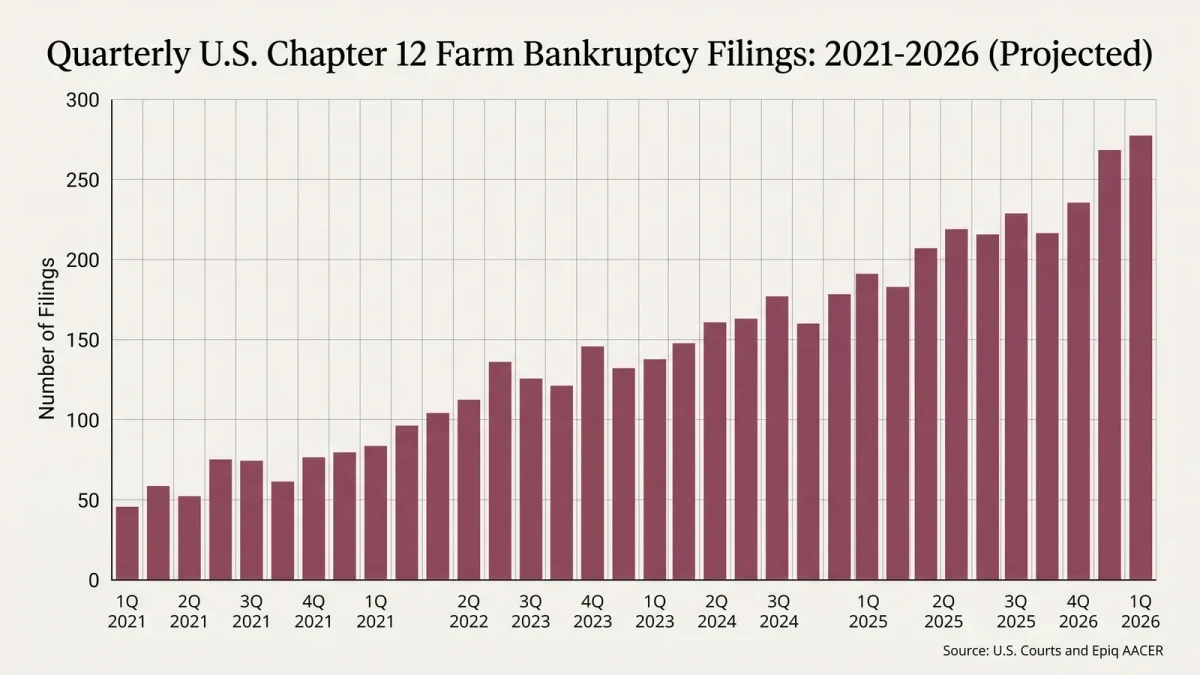
US Chapter 12 family-farm bankruptcy filings reached 62 in April 2026, up about 130 percent from April 2025, per Epiq AACER monthly filing data published in early May 2026. The rise tracks the broader pattern in federal records: total US bankruptcy filings for the 12 months ending March 31, 2026 rose 11.9 percent to 591,850, per US Courts statistics.
Farm Press Theme publishes information, not financial advice, and reports bankruptcy data strictly as aggregate, attributed figures from court and trustee records. Nothing here assigns fault for any filing, and individual cases are not identified.
What is Chapter 12 and why does it exist?
Chapter 12 is a bankruptcy chapter created for family farmers and fishermen, allowing a reorganization with debt ceilings and seasonal repayment scheduling matched to farm cash flow, administered under the US Trustee Program within the Department of Justice. The program released its fiscal year 2025 annual Chapter 12 report on March 5, 2026, per the DOJ US Trustee data page, which remains the official record for case statistics and trustee activity.
What do the numbers actually show?
Three documented signals, none of them complete on its own. First, the April 2026 monthly count of 62 Chapter 12 filings, per Epiq AACER data, is a high single-month reading against recent years. Second, annual totals have been grinding higher since the 2021 trough, consistent with the commodity-price and interest-rate squeeze that followed. Third, farm-sector stress indicators line up with it: the USDA September 2025 forecast showed farm debt rising and working capital tightening even as sector income grew.
Which operations show up in the trend?
Aggregate records do not name sectors, but the economics of 2024-2026 point where analysts and lenders agree the pressure sits: operations dependent on purchased feed and facing multi-year negative margins in dairy and cattle, and highly leveraged operations that expanded at 2022 land and machinery prices. Regions with tighter margins and higher debt-to-asset ratios carry more of the load than the national average suggests.
What does a Chapter 12 case involve?
A filed plan proposes repayment over three to five years, with seasonal payment timing; secured lenders deal with valuation of collateral, and the farm typically keeps operating while the plan runs. The DOJ trustee report and US Courts statistics describe the process and outcomes; success rates vary with the debt structure and the commodity cycle a case lands in.
What should a stressed operation do short of filing?
The documented pattern in every downturn is that early action preserves options: a lender conversation before missed payments, a written cash-flow projection, and a review of FSA guaranteed loan and farm credit counseling resources before retainers are due. Bankruptcy records measure the operations that ran out of alternatives; the count of farms that restructured privately is larger and invisible.