Used farm equipment prices move for three main reasons: the seasonal auction calendar, the way machinery loses value fastest in its first years, and the local balance of buyers to sellers at any given sale. None of these is a secret, but together they mean two similar tractors can sell for very different money depending on when and where they cross the block. The plain meaning of the question — why prices swing — is worth spelling out, because each cause points to a different timing decision.
The most important qualification is regional. A used combine's price in a heavy row-crop county will not match the same machine's price where acreages are smaller and crop mixes differ. Treat every general pattern here as a starting point, then check it against recent sales in your own area before you bid.
What drives the auction cycle?
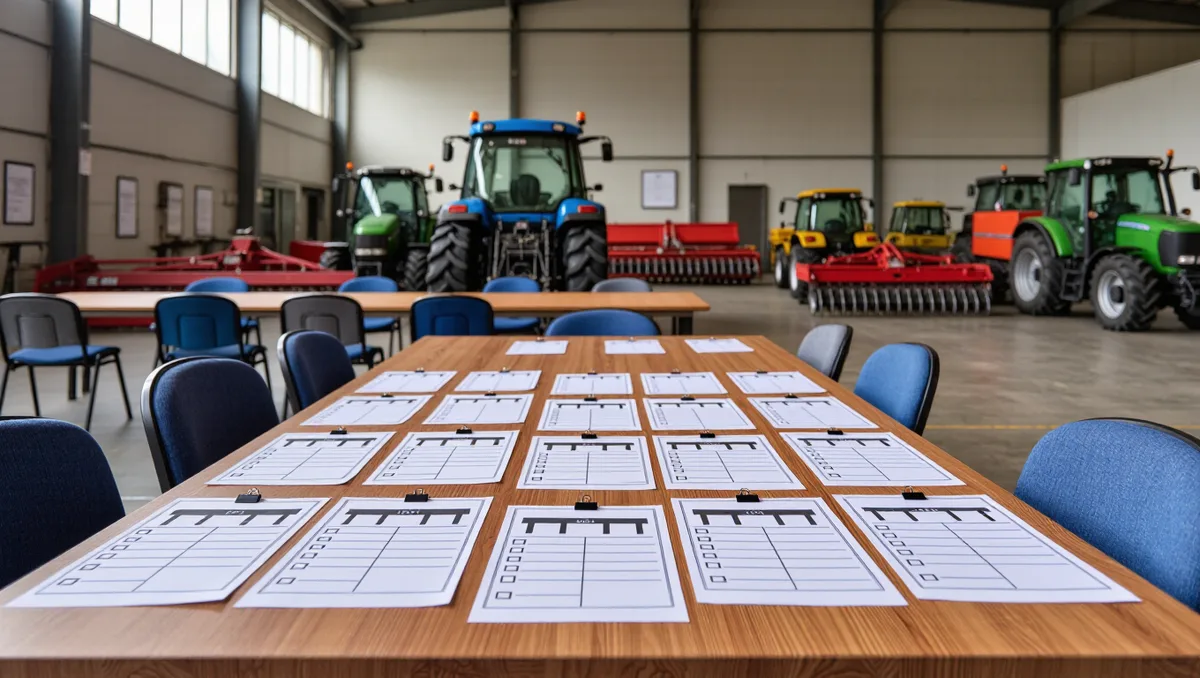
Consignment and farm-dispersal auctions cluster around the calendar. Many dispersals happen after harvest, when a seller has finished the season and wants machinery moved before winter storage costs pile up. Estate sales and retirements also tend to land in late fall and winter, when the field work is done and buyers have time to attend. That clustering puts more machines in front of more buyers at the same moments.
For a buyer, more supply at one sale can mean better prices, especially on common models where several lots compete with each other. For a seller, it is the opposite: your tractor is one of six that day. Spring sales, by contrast, often draw buyers who need a machine running now, and urgency tends to lift what they will pay. Neither pattern is a guarantee. Local auction houses, weather delays and a strong or weak harvest all shift the mix. The practical read is simple: the buyer with flexibility on timing has an edge, and the buyer who must own a machine by planting has little.
How does depreciation shape the price?
Machinery loses value fastest early in its life. The first owner absorbs the steepest drop, which is why low-hour, recent-model used equipment carries the sharpest premium over older iron relative to its condition. After the first few years, the curve flattens. An older machine that has been maintained can hold its value for a long stretch, because its price is already close to its working worth as scrap-plus-parts-plus-field-use.
This matters for timing because the sweet spot for many buyers sits in that flatter middle of the curve: past the steep early loss, still with years of work ahead. Hours and condition matter more than age in that range. Two same-year tractors can differ widely if one logged road time and light field work and the other pulled heavy loads. Service records, rebuild history and hours on the meter are the evidence that tells you where a specific machine sits on its own curve.
What should you check before you bid?
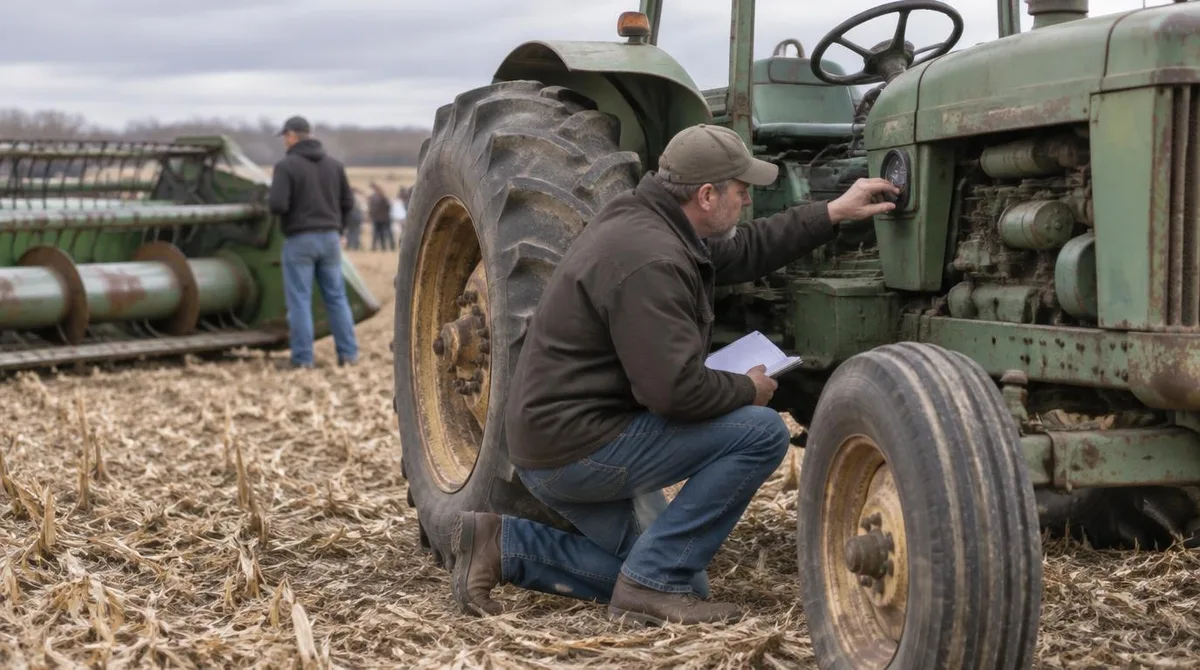
Inspection is where the price swing becomes your opportunity or your mistake. A machine with a known history is worth more, and a machine with an unknown history should be priced as a risk. Before any bid, work through the basics in a fixed order so nothing gets skipped under auction-day pressure.
- Pull the service and ownership records where available, and match hours against the auction sheet.
- Check for leaks: engine oil, hydraulic fluid, coolant, and any wet spots around seals.
- Run the machine cold if the sale allows it. Cold starts reveal problems a warmed-up engine hides.
- Inspect wear points — pins, bushings, belts, tires, and on a combine, the header and threshing components.
- Test every function under load: hydraulics, PTO, transmission ranges, and electronics.
Budget for what you find. A discount that looks large on the block can evaporate once parts and shop time are priced in. For a closer look at how sale-day paperwork encodes condition and history, see our guide to reading a farm equipment auction sheet before you bid. Readers following this should also see How to read a farm equipment auction sheet before you bid.
How do financing and farm income change the market?
Used equipment is a capital purchase, so the cost and availability of credit moves the whole market. When borrowing is expensive, marginal buyers step back and auction prices soften. When credit is easy, more bidders show up with financing in hand and competition rises. Lending standards at farm lenders shape who can bid at all; our overview of Farm Credit System lending standards covers what borrowers are typically asked to show. We covered a connected angle in Farm Credit System lending standards: what borrowers should know.
Farm income works the same lever. Strong income years put cash in buyers' pockets and lift prices across the used lot; tight years do the reverse. USDA's farm income forecasts, which we track in coverage of the latest 2026 farm income outlook, are one of the few published signals of where that pressure sits. Neither signal tells you what a specific machine is worth on a specific day. Both tell you which way the crowd at the auction ring is leaning.
What this means for timing your buy
Our analysis, taken together: the buyer who controls timing wins on three margins at once. First, shop the supply-heavy part of the auction calendar — late fall and winter dispersals — when more lots compete for the same bidders. Second, target the flat middle of the depreciation curve, where hours and maintenance history matter more than model year. Third, line up financing before sale day, so your bid reflects the machine's worth to you rather than the pressure of a deadline.
None of this removes the need for inspection discipline. The biggest price swings in used equipment happen between two buyers looking at the same machine, one of whom knows what to check. The calendar and the credit cycle set the market; the inspection sets your deal. For more on the money side of farm decisions, browse our business news coverage and our broader agribusiness section.
What remains unknown
The evidence here establishes the mechanisms — calendar clustering, early-life depreciation, credit conditions — but not a price forecast for any region or model. Local auction results, recent comparable sales and a dealer's trade-in quotes remain the only reliable read on what a specific machine will cost you this month. Watch those, not the general trend lines.