Ethanol is made by fermenting sugar with yeast, then distilling the alcohol out of the resulting beer. In the United States, that sugar starts as corn starch, which enzymes convert into fermentable glucose before the yeast goes to work. Most U.S. gasoline contains ethanol, typically in a 10 percent blend called E10, per Chemical Safety Facts, which cites Department of Energy material on the blend's octane benefits.
For a corn grower, the process matters twice over. It is a demand story — ethanol plants are a standing buyer of grain — and a feed story, because the plant's leftover solids and liquid return to the livestock sector as co-products. The economics of the whole chain run through the same balance sheet, which is why agribusiness watchers track plant margins as closely as they track basis.
Scale is worth stating plainly. According to Wikipedia's ethanol entry, world production of ethanol fuel reached 112.0 gigalitres — about 29.6 billion U.S. gallons — in 2023, with the United States accounting for 51 percent and Brazil 26 percent. The U.S. share rests almost entirely on corn; Brazil's rests on sugarcane.
How does corn starch become alcohol?
The core reaction is old. Yeast — commercially, usually Saccharomyces cerevisiae, the same species that raises bread and brews beer — consumes simple sugars and produces ethanol and carbon dioxide, as ScienceInsights explains in its chemistry overview. The difference at a fuel plant is scale and one extra step.
Corn does not carry free sugar a yeast can eat. It carries starch, long chains of glucose. Enzymes break those chains into fermentable sugars first. Sugarcane and sugar beets skip that step because their sugar is already available; starchy crops like corn, wheat, and cassava need it. That extra conversion is the defining feature of grain-based ethanol production.
Once the sugars are in solution, fermentation runs until the yeast's tolerance to alcohol — its own waste product — limits the process. S. cerevisiae dominates commercial production because it tolerates relatively high ethanol concentrations without dying off, which lets fermentation reach useful alcohol levels before the yeast gives out.
What happens in the distillery?
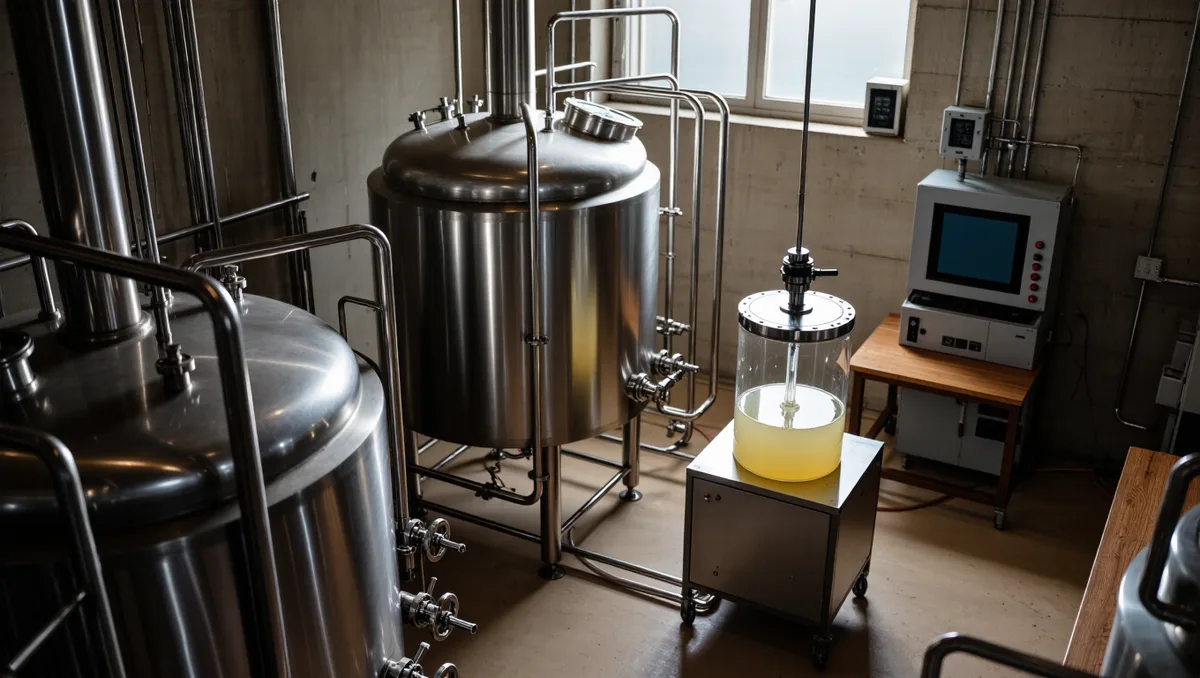
After fermentation, the plant holds a weak alcoholic mash — essentially industrial beer. Distillation separates the alcohol by exploiting a physical fact: ethanol boils at 78.2 °C (173 °F), well below water's boiling point, as ScienceInsights notes in its properties overview. Heat the mash, capture the vapor, condense it, and repeat through columns until the alcohol concentration is high enough for fuel use.
Fuel ethanol then goes through one more step. It is denatured — small amounts of chemicals are added to make it undrinkable — so it can be sold without beverage-alcohol tax, per ScienceInsights. The chemistry is straightforward; the tax treatment is what makes the step necessary.
Distillation itself is centuries old. ChemicalBook's ethanol profile credits Islamic alchemists with developing the art, and notes ethanol's isolation as a relatively pure compound happened long before anyone thought of putting it in a fuel tank. Henry Ford's 1908 Model T was designed to run on alcohol, the same profile records — a reminder that the fuel use is not new, only its industrial scale is.
What is left over: the co-product story
The starch is not the whole kernel. Once fermentable sugar is stripped out of the corn, what remains — protein, fat, fiber, and the dissolved solids from the process — is dried and sold as livestock feed, most familiarly as distillers grains. A fuel plant is therefore also a feed plant, and the feed revenue is part of how plant economics work.
Carbon dioxide is the other co-product. Fermentation releases it as the yeast works, and some plants capture and sell it for food processing and industrial uses. For the livestock side of the industry, the feed co-product is the meaningful one: ethanol demand and feed supply are linked, not competing, at the plant gate.
That linkage shows up in the grain market. Feed buyers and ethanol plants bid against each other for the same bushels, and the price relationships between local cash grain and the futures contract — what grain basis measures — move with that competition. Readers who want the mechanics can see What grain basis measures, and why it swings by region.
Why do policy rules shape ethanol demand?
The promise ethanol makes to the public is simple: a homegrown, cleaner-burning additive for gasoline. That promise is enforced and sustained by rules, not just chemistry. More than 98 percent of U.S. gasoline contains ethanol, per Chemical Safety Facts, which attributes the figure to Department of Energy material — a penetration level that exists because blending requirements and octane economics both point the same direction.
The blend ladder matters at the farm gate. E10 is the standard. E15 contains 15 percent ethanol and is approved for flex-fuel vehicles and a small share of newer vehicles, per ChemicalBook. E85 — 85 percent ethanol — is for flex-fuel vehicles. Every rung up the ladder is more corn demand per gallon of gasoline sold, which is why blend approvals are watched as closely as weather markets.
Government programs built this market. ChemicalBook records that ethanol use as car fuel in Brazil and the United States has been promoted by government programs, and that Brazil's program began as a way to cut oil-import reliance. The U.S. version pairs the blend rules with renewable-fuel policy; the interaction of those rules with feedstock markets is covered in Renewable diesel feedstock demand tightens with new RVO.
What this means for corn demand
Our analysis: the ethanol economy is best understood as three markets in one. The fuel market sets how much starch the plants want. The feed market sets what the leftovers are worth. The policy market sets the floor under the whole structure. A bushel's value at the elevator reflects all three at once.
Supply matters too. USDA's August 2025 WASDE sized a big corn crop, and large crops against steady plant demand tend to keep the ethanol industry's grain costs favorable. When the crop is short, the same plants bid harder, and the feed side feels it in co-product prices.
What remains unknown is the direction of the policy market. Blend levels, renewable-fuel volume rules, and vehicle-fleet composition all sit in regulatory hands, and none of them moves on an agronomic schedule. Operators marketing grain into ethanol-heavy regions have reason to watch those docket items the way they watch export demand — as a demand variable they cannot control but can plan around.
The takeaways
The process is simple to describe and industrial in practice: enzymes turn corn starch into sugar, yeast turns sugar into alcohol and carbon dioxide, distillation and denaturing turn the alcohol into fuel, and the residue turns into livestock feed. Nothing in the chain is wasted by design; the co-products are the business model.
- Ethanol is fermentation plus distillation, with an enzyme step for starch crops.
- The United States produced just over half of the world's fuel ethanol in 2023, per Wikipedia's sourced production figures.
- Distillers grains and captured carbon dioxide are the plant's other products, and the feed co-product links ethanol demand to livestock feeding economics.
- Blend rules — E10 as the norm, E15 and E85 above it — are the policy lever that converts gallons of gasoline into bushels of corn.
For anyone pricing corn or feeding cattle, the ethanol economy is not a side story. It is one of the standing bid prices under the grain market, and its rules are written in Washington as much as in the plant's fermentation tanks.