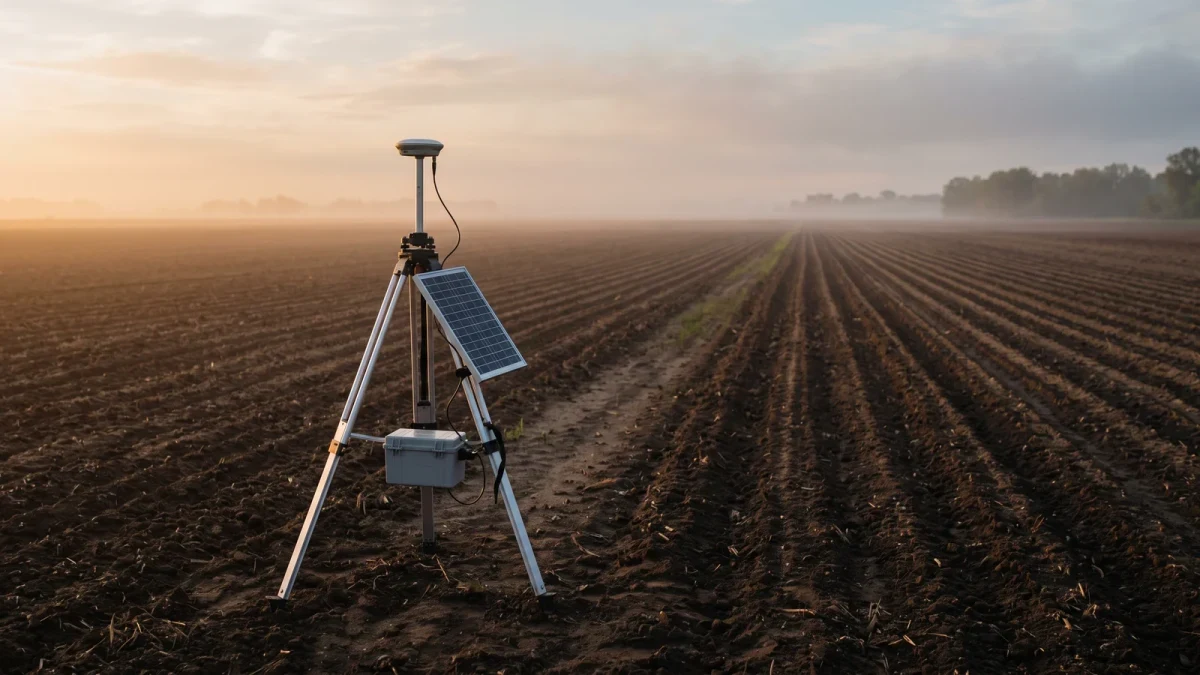
Guidance systems with autosteer, the most widely adopted precision agriculture tools, were used on roughly half of planted acres across major U.S. field crops including corn and soybeans, according to USDA Economic Research Service analysis published in 2023, and their return comes from pass-overlap reduction that shows up directly in fuel, seed, and chemical savings. The technologies layered above guidance, variable-rate application, section control, and subscription-based data platforms, each carry their own payback math that operators have to run field by field.
Farm Press Theme publishes information, not investment advice. Return figures below come from documented USDA analysis and university extension trials, with their regions and dates; no vendor claim is treated as verified by the seller.
What does the adoption record actually show?
The ERS report Precision Agriculture in the Digital Era, published in 2023 from national field-level survey data, found adoption concentrated where the economics are easiest: guidance and autosteer on about half of acreage across corn, soybeans, and other major crops, with mapping and variable-rate technology used on a smaller share. Adoption tracked farm size: large row-crop operations adopted most tools at rates several times those of mid-size farms, mainly because the fixed cost of the technology spreads across more acres.
That size pattern is the first screen for any ROI question. A subscription or hardware cost that is trivial at 5,000 acres can be impossible at 800.
Why does autosteer clear the bar so easily?
Guidance earns its keep by removing overlap. Every pass that overlaps the last one by even a small margin wastes fuel, seed, spray, and time, and university extension analyses have long quantified the savings from sub-inch or two-inch pass accuracy versus manual steering at typical operator fatigue levels. The hardware is now frequently bundled on new tractors, combines, and sprayers, which drops the incremental cost toward zero for operators already replacing machinery.
Section control on sprayers and planters extends the same logic to point rows and irregular fields: shutting off sections on overlaps around waterways and terraces eliminates double application. University trials across the Corn Belt have documented input savings that are largest on irregular fields and smallest on square quarter-sections, which is why the same technology earns very different returns two counties apart.
Does variable-rate application pay?
Variable-rate fertilizer and seeding is where the record gets conditional. The ERS analysis found variable-rate technology used on a minority of acres. University extension trials, including multi-year work at institutions such as Iowa State, Purdue, and Ohio State, show returns that depend on the variability actually present in the field: on fields with wide soil-type or yield spread, matching rates to zones saves fertilizer or finds extra bushels; on uniform fields, the technology mostly adds cost and analysis time.
The honest sequence most extension economists recommend: several years of yield-map and soil-test data first, zones drawn from that evidence second, variable-rate equipment third. Buying the capability before the evidence reverses the order.
What about the data subscriptions?
Farm management platforms that bundle monitoring, agronomic modeling, and equipment connectivity are usually priced per acre per year, which makes them a recurring cost rather than a one-time purchase. The ROI question is different in kind: a subscription must beat the alternative of the same data handled with spreadsheets and yield maps, and the documented answer varies with how much of the platform's output an operation actually changes decisions on. Operators who quit after the first season most often report they were paying for dashboards they did not act on.
How should an operator run the decision?
A documented framework, in the order extension economists tend to give it: start with the acres involved and the field shapes, irregular fields reward section control more. Write the cost as cost per acre per year, including subscription and support, not sticker price. Pull the evidence, several years of yield maps and soil tests, before buying variable-rate capability. Pilot on one farm for a full season against check strips, so the comparison is against the operation's own baseline. And keep vendor documentation for every performance claim; per this site's rules, a manufacturer's spec sheet is a source to cite, not a result to trust.
| Technology | Primary saving | Where ROI is strongest |
|---|---|---|
| Guidance/autosteer | Pass-overlap fuel, time | Nearly universal; often bundled on new machines |
| Section control | Seed and chemical on overlaps | Irregular fields, waterways, terraces |
| Variable-rate inputs | Fertilizer, seed matching zones | Fields with documented soil and yield variability |
| Data platforms | Decision support, records | Operations that act on the outputs |
Frequently asked questions
How widely is precision agriculture adopted?
Guidance with autosteer led, used on roughly half of planted acres across major U.S. field crops, per USDA Economic Research Service analysis published in 2023. Variable-rate and mapping technologies covered a smaller share of acres, with adoption concentrated on larger operations.
Does autosteer have a positive return?
In most documented cases, yes. Savings come from eliminating pass overlap in fuel, seed, and chemical, and on new machinery the guidance hardware is frequently bundled, lowering the incremental cost. Returns are largest with long passes and operator fatigue.
Is variable-rate seeding and fertilizing worth it?
It depends on documented field variability. University trials show savings where soil and yield spread across zones is wide; on uniform fields the equipment mostly adds cost. Several years of yield maps and soil tests should come before the hardware.
What does a precision ag subscription cost?
Platforms are typically priced per acre per year rather than as a one-time purchase, and rates vary by vendor and package. For ROI, divide the annual cost by operated acres and compare against the decisions it actually changes.
Should equipment performance claims be taken at face value?
No. Input and equipment claims belong to manufacturer documentation or named independent trials, and vendors' own materials are claims to verify, not results. Independent university trials are the standard check.