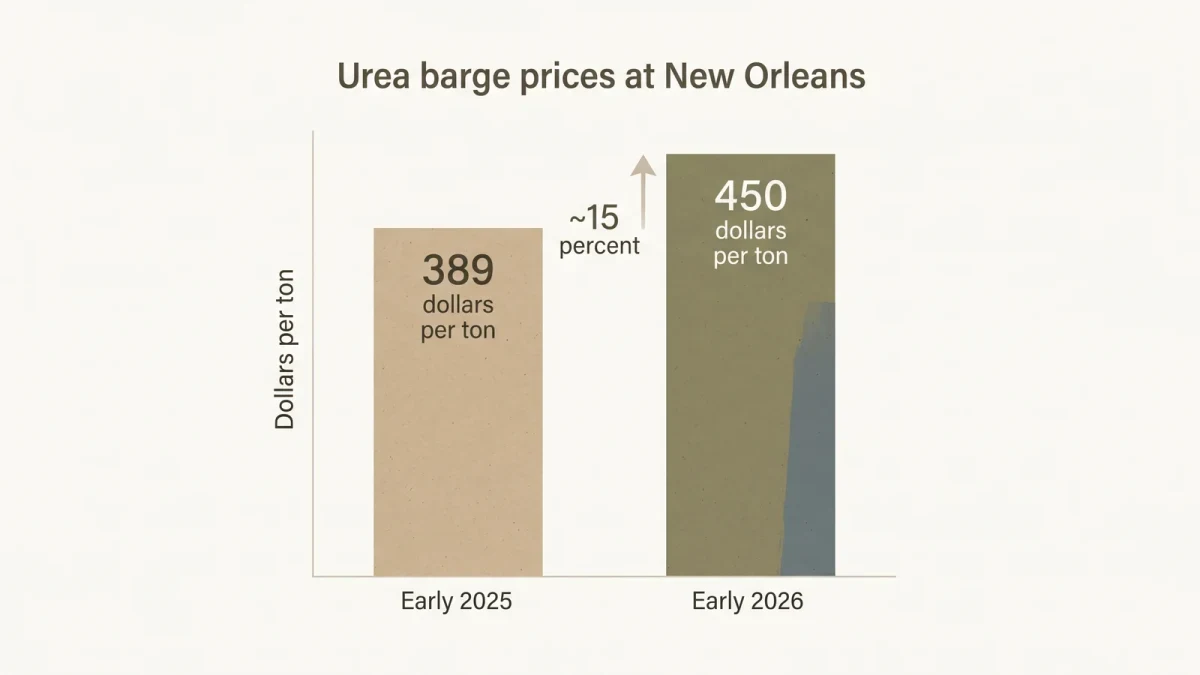
Fertilizer enters the 2026 planting season meaningfully more expensive than a year ago: a barge of urea at the port of New Orleans traded around $450 a ton in early 2026 versus roughly $389 in early 2025, per CME Group market commentary in January 2026. The American Farm Bureau Federation's late-2025 outlook had already flagged costs trending above prior-year levels, with tighter margins expected to persist into 2026.
Farm Press Theme publishes information, not purchasing advice; the buy-or-wait call belongs to the operator and the local retailer's book. The numbers themselves, though, are worth sitting down with before spring prepay windows close.
Which nutrients are driving the increase?
Nitrogen leads. Urea's jump at the Gulf reflects global supply tightness rather than a single domestic event, and January 2026 delivered the strongest month-on-month urea gains since the third quarter of 2024, per trade market reports. Anhydrous ammonia, the workhorse nitrogen form for Corn Belt fall and spring applications, softened below $850 a ton during the first quarter of 2026 before firming again later in the year, per University of Illinois farmdoc daily price tracking — meaning spring applicators caught a window that fall buyers did not. Phosphate and potash profiles differ: potash has been comparatively steadier, helped by the late-2025 removal of tariffs on imports that the Farm Bureau outlook counted among the few cost positives for 2026.
What is the operator consequence at the farm gate?
Budget math first. On a 180-bushel corn crop demanding roughly 200 pounds of nitrogen per acre, every $50 a ton move in ammonia shifts nitrogen cost by several dollars an acre — enough to matter against cash rents fixed last fall. Three practical effects follow. Retailer prepay and booking terms for spring 2026 were written against rising replacement costs, so late buyers face the full increase. Manure and split-application plans gain value in this price environment; university trials have long shown late-spring nitrogen applications matching or beating fall application on corn in the central Corn Belt. And the margin squeeze lands unevenly by region — growers in areas with higher basis and freight, not just higher product prices, feel it first.
Does anything point to relief later in 2026?
Two documented forces cut both ways. Tariff relief on imports, confirmed in late 2025, per the Farm Bureau outlook, supports potash and urea availability through the season. Against that, domestic feedstock costs and global demand set the nitrogen floor, and Farm Bureau surveying reported farmers largely covered their 2026 nutrient needs early while flagging sharply higher price and supply risk for 2027. In other words, the comfort is for this crop year, not the next one — a reason fall 2026 pricing conversations may start earlier than usual.
Frequently asked questions
How much higher are fertilizer prices than a year ago?
Urea barges at New Orleans traded near $450 a ton in early 2026 versus about $389 in early 2025, per CME Group market commentary — roughly 15 percent above year-ago levels.
Is anhydrous ammonia also higher?
Ammonia softened below $850 a ton during the first quarter of 2026, per University of Illinois farmdoc daily tracking, after a stronger late-2025 market, so spring applicators saw better numbers than fall buyers.
What removed tariff pressure means for 2026?
Late-2025 tariff removal on key imports was the single most positive cost development for 2026 input budgets, per the American Farm Bureau Federation outlook, mainly supporting potash and urea supply.