America's grain export system is moving more volume through aging hardware. Roughly 60 percent of U.S. grain exports reach Gulf terminals by barge on the Mississippi River system, per USDA's Agricultural Marketing Service Grain Transportation Report, and 2025 barge grain movements rose despite weather disruptions on the river. Meanwhile USDA projected the 2025/26 soybean export program down 13 percent from 2024/25, per the January 8, 2026 Grain Transportation Report, even as corn exports were projected up about 15 percent — a mix that reshapes which elevator the bushels flow through.
What shape is the river system in?
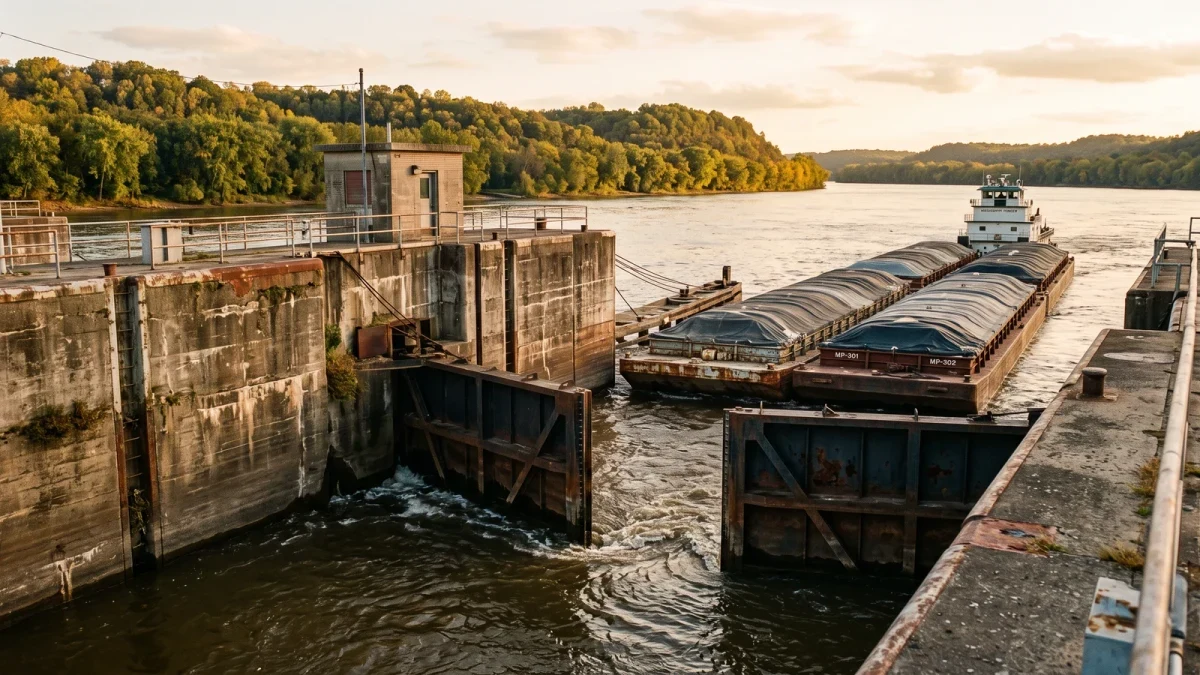
Old, and quietly being upgraded. Most Upper Mississippi and Illinois Waterway locks were built in the 1930s with 600-foot chambers, forcing a modern 1,100-foot tow to lock through twice. The first major fix in decades is under construction at Lock and Dam 25 near Winfield, Missouri: a new 1,200-foot chamber under a U.S. Army Corps of Engineers contract awarded in 2024 for about $732 million, with completion targeted around 2028. Downbound grain barge rates, tracked weekly by AMS, remain the market's live gauge of system stress — low-water autumns in recent years have shown how quickly freight spikes when the river drops. A serious outage at a key lock remains the tail risk: United Soybean Board-commissioned analysis has estimated a major Illinois Waterway lock failure could cost the economy on the order of $1.7 billion a year.
What did the 2025/26 export mix do to flows?
The composition shifted. USDA's projections for the 2025/26 marketing year — corn exports up roughly 15 percent and wheat up about 9 percent, against soybeans down 13 percent, per USDA data summarized in the Grain Transportation Report — pushed more early-season volume into corn channels, where the Gulf barge share is largest. Corn is also the crop most exposed to lock timing: its export program front-loads into the months when river conditions are least predictable, per trade reporting on AMS data. Rail picks up slack when the river misbehaves — the same reports show shuttle-train tariff rates for corn and soybeans repricing with each disruption — but not at barge economics, and the difference lands in basis.
What does this mean at the farm gate?
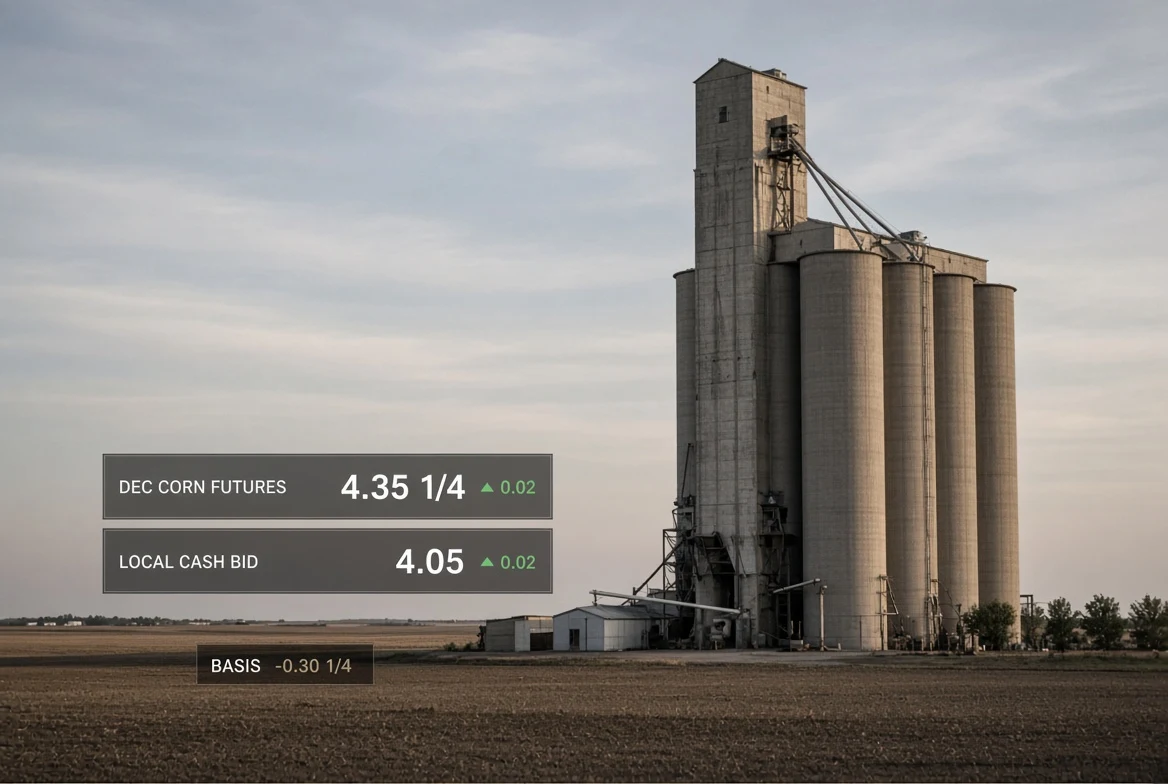
Watch basis, not headlines. When lock delays or low water hit, the cost shows up as weaker basis at interior elevators that ship by barge, and stronger basis on rail-served and river-terminal strips. For 2026 harvest marketing, three documented consequences: stored corn with flexible delivery windows is better positioned to wait out a freight spike than committed bushels; soybean basis in 2025/26 carried the weight of the smaller export program, so soybean-heavy rotations felt the export mix directly; and every additional season before the new 1,200-foot chambers open keeps double-locking delays — and the freight premium they imply — in the system through at least 2028.
Frequently asked questions
How much U.S. grain goes by barge?
Roughly 60 percent of U.S. grain exports move by barge on the Mississippi River system to Gulf export elevators, per USDA's Agricultural Marketing Service Grain Transportation Report.
When will the new lock at Lock 25 open?
The new 1,200-foot chamber at Lock and Dam 25, under a contract awarded in 2024 for about $732 million, is targeted for completion around 2028, per the Army Corps of Engineers.
Why does soybean export volume matter to basis?
USDA projected 2025/26 soybean exports down 13 percent, and export volume sets how hard Gulf terminals compete for bushels — a smaller program typically softens interior soybean basis.