Beef packing has flipped from too little capacity to too much. Cow slaughter plants were running at roughly 55 to 60 percent utilization by early 2026, per Drovers, while the announced expansion list — on paper up to 20,000 head of daily slaughter capacity, per Farm Progress — collided with the smallest U.S. cattle herd in decades. The squeeze, not the shortage, is now the industry's capacity story.
What changed in the capacity math?
Two curves crossed. Cattle inventories kept falling through 2025 into 2026, while plants announced and built expansions sized for a bigger supply — the same dynamic that once had growers complaining about packing bottlenecks in 2020-2023. By early 2026, per Drovers, some cow slaughter facilities were running barely above half of capacity, and packers began publicly reconsidering projects; Farm Progress reported that the announced expansion list was being revisited as cattle margins compressed. Capacity-building did not stop everywhere: USDA's Meat and Poultry Processing Expansion Program moved into a fourth phase of grants for smaller regional plants, per the USDA Rural Development program page, keeping the public-money lane open even as the corporate lane narrowed. In 2025, 937 federally inspected plants slaughtered 29.25 million head, USDA inspection data show.
What does this mean at the farm gate?
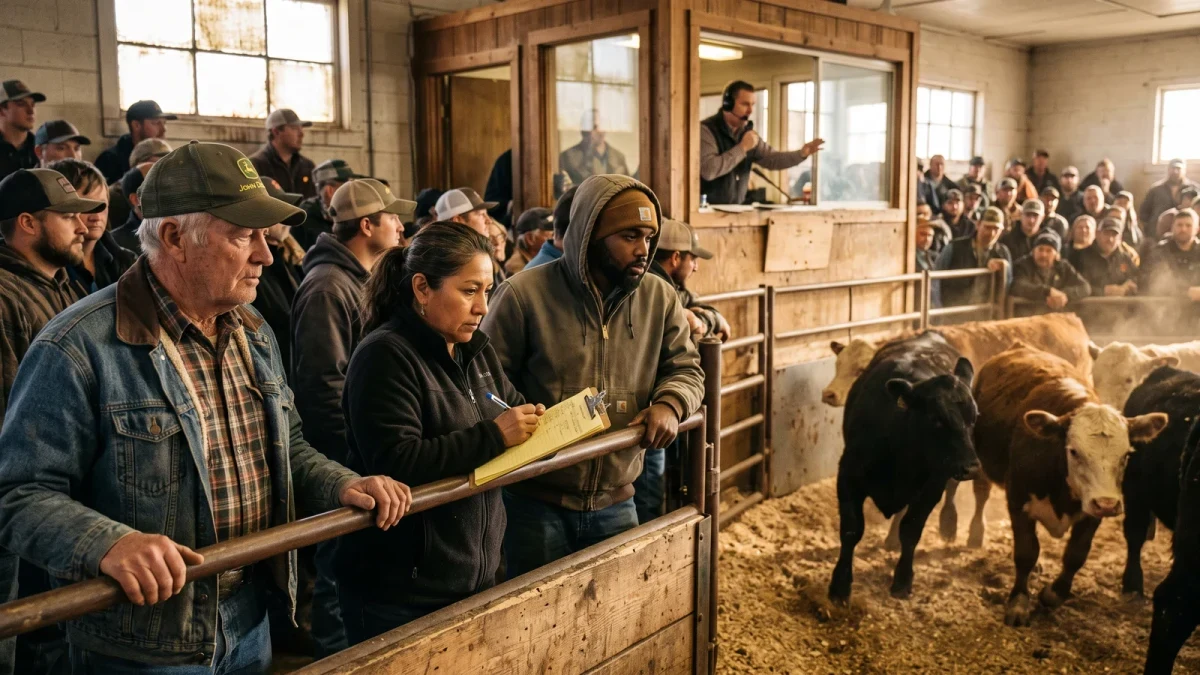
For cow-calf and backgrounding operations, competing packers are the one genuinely good piece of the price picture: when plants fight over cattle, fed cattle and cull cow bids strengthen, and that strength has been visible in 2026 cattle markets alongside record retail beef prices. The costs sit elsewhere. Feeders face replacement heifer economics that discourage expansion while bred female prices run hot, which keeps the supply squeeze self-reinforcing. For dairy and cull-cow sellers, a plant closure — the risk Investigate Midwest's sources flagged as cattle numbers fall — would mean longer hauls and thinner local competition, historically worth several dollars per hundredweight. And for producers who invested in direct-market or locker processing, the MPPEP grant rounds are the documented funding channel to watch.
Is the poultry and pork picture the same?
Not identical. The capacity problem is species-specific: pork and poultry processing ran nearer to capacity through 2025 than beef did, so the utilization squeeze documented in Drovers and Farm Progress reporting is a cattle-cycle story, driven by the smallest U.S. herd in decades rather than by demand. That is also why analysts treat the beef flip as temporary: herds eventually rebuild, and the plants being squeezed now were sized for that later herd, not this one. The open question the documents leave is which announced projects survive to see it.
Frequently asked questions
Why are packers struggling if beef prices are high?
Because cattle are scarce. Plants running at 55 to 60 percent utilization on a shrinking herd compress packing margins even at record retail beef prices, per Drovers reporting.
Are new beef plants still being built?
Some announced projects adding up to 20,000 head of daily capacity are being reconsidered as of early 2026, per Farm Progress, while USDA's MPPEP grants continue for smaller regional plants.
What should cull-cow sellers watch?
Local plant utilization. If a nearby cow slaughter plant closes as cattle numbers fall, hauling distances grow and competition thins — historically a measurable per-hundredweight cost.