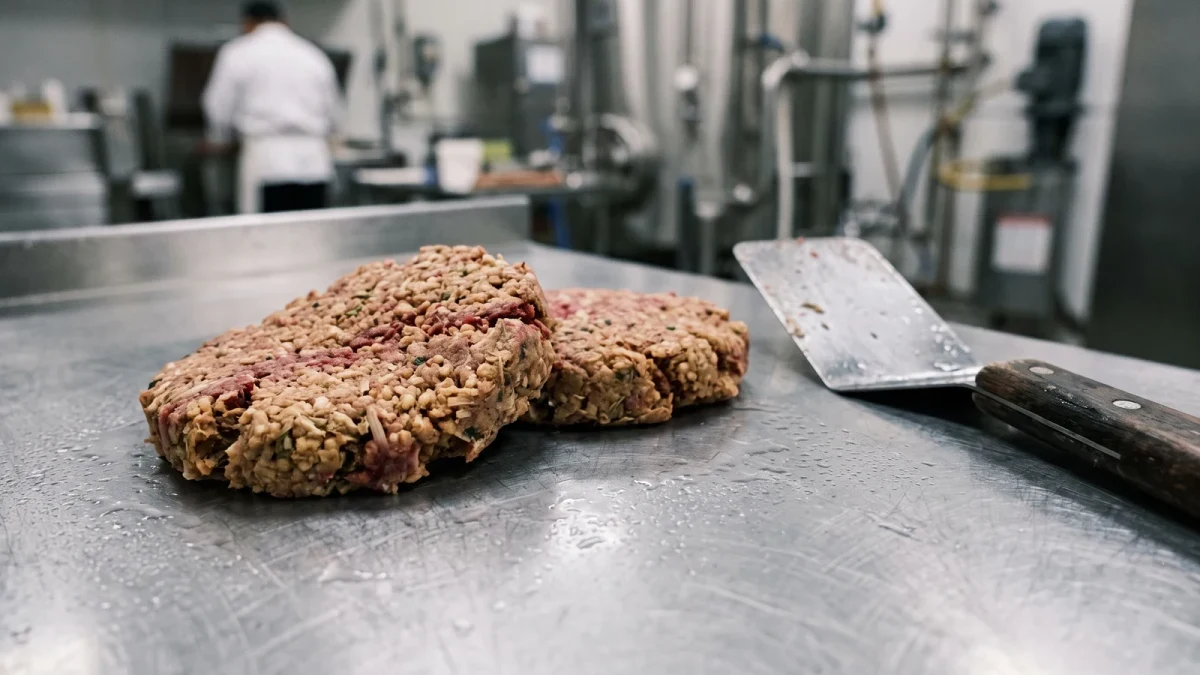
The plant-based meat category has contracted sharply from its pandemic-era peak. Beyond Meat, the segment's most public company, reported annual net revenues of about $465 million in 2021 and about $326 million in 2024, per its annual filings with the Securities and Exchange Commission, a decline of roughly 30 percent over three years. Retail unit sales across the broader plant-based meat segment fell steadily over the same period, per industry tracker data reported in trade coverage, as repeat purchases failed to materialize at the rates early forecasts assumed.
This site publishes information, not investment advice, and nothing here concerns a company's stock. The correction matters to farm and food readers for a different reason: it repriced an ingredients demand story that several crop sectors had priced in, and it left behind a smaller but real category whose mechanics are worth understanding without the boom-year adjectives.
What is plant-based meat, mechanically?
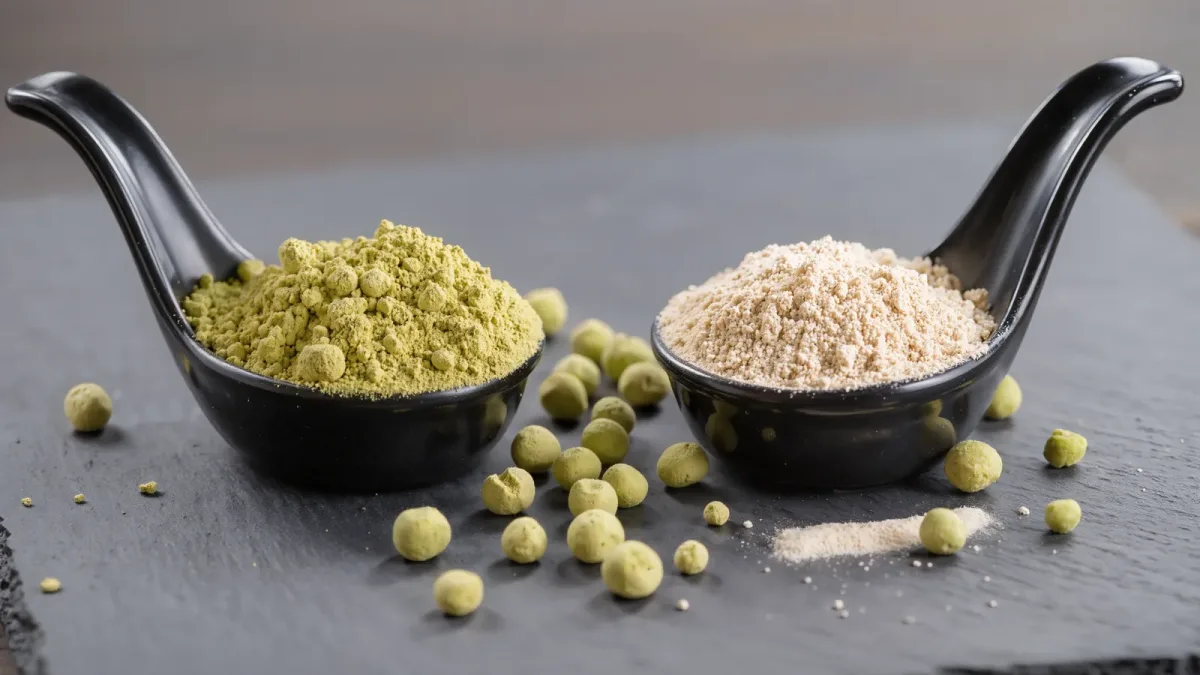
Plant-based meat is a processed food designed to approximate the texture, flavor, and cooking behavior of ground meat using plant proteins. The dominant inputs are pea protein, soy protein, wheat gluten, and oils, combined with binders, flavorings, and heme-style colorants in the flagship burger products. It is an ingredients and extrusion business at heart, not a farming-adjacent craft product, and its economics are set on the processing line.
That matters because the category's cost structure never fully closed the gap with commodity ground beef. Retail prices for leading plant-based burgers settled well above the price of conventional ground beef in most weeks of 2023 through 2025, per USDA Agricultural Marketing Service retail price reports, which constrained trial among exactly the value-focused shoppers who drive volume in the meat case.
Why did the growth story stall?
Three documented problems compounded. First, repeat rates disappointed: a large share of triers did not become regular buyers, leaving the category dependent on expensive perpetual trial-building. Second, the product settled into a specific use case, flexitarian households mixing it into occasional meals, rather than replacing meat for the mass market as early projections assumed. Third, the health positioning weakened, as shoppers and nutrition commentators noted that the products were highly processed, which cooled the perception advantage over meat.
The financial consequences were visible in the filings and in plant economics. Beyond Meat's revenue decline was joined by capacity cutbacks and workforce reductions announced in 2023 and 2024, and some announced U.S. manufacturing projects in the alternative protein space were scaled back or shelved during the same period, per company statements and trade press coverage through 2025.
What happened on the ingredient supply side?
Pea protein was the signature farm-linked story. Rising demand through 2021 and 2022 supported expanded yellow pea acres in the northern plains and Canada and drew proposals for new protein-isolation capacity in North America and Europe. When category growth undershot, several announced isolation plants were delayed or restructured, per company announcements and trade coverage in 2023 through 2025, and pea prices retreated from their peaks, easing the premium that had drawn acres.
The lesson for growers is the standard one for ingredient-driven demand: processing capacity leads acres, and announced capacity is not the same as operating capacity. Yellow pea remains a useful rotation crop with established demand in milling, export, and protein channels, but the outsized demand-growth case of 2021 is no longer the planning baseline.
Did the whole category decline equally?
No, and the split is the most useful finding of the correction. Plant-based milk, the oldest and largest segment, held a stable single-digit share of the milk category through the same years that meat alternatives shrank, per USDA and industry data reported through 2025. Oat milk in particular continued to grow in food service. The correction concentrated in the newer meat-imitation segment, where the value proposition was weakest.
Within meat alternatives, whole-muscle-style products and private-label versions showed more resilience than premium branded burgers, per retail scanner data reported in trade coverage, suggesting the surviving demand is price-sensitive and format-flexible rather than brand-loyal.
What does the corrected category look like going forward?
As of late 2025, plant-based meat is a niche of the total meat case, with U.S. retail sales measured in the low billions of dollars annually against a meat market of well over a hundred billion, per USDA and industry figures. That is a smaller business than the projections printed in 2020 and 2021, but it is a real one, with national distribution, established ingredient supply chains, and a base of committed buyers.
For food manufacturers, the correction pushed strategy toward blended products, private label, and food service channels, and toward cost reduction on the ingredient bill. For crop producers, protein-crop demand exists but now prices in normal demand-growth assumptions rather than disruption scenarios.
What should farm operators take from it?
Two things. First, when an ingredients demand story arrives with venture-style growth projections, discount the projections and watch for actual operating capacity, not announcements. Second, demand for crop protein has not vanished; it has diversified into pet food, sports nutrition, and blended mainstream products, which are steadier, lower-margin channels than the flagship burger case promised.
The plant-based correction was, in the end, a normal outcome for a hyped food category: a real product, a real but smaller audience, and a supply chain that overshot. Farm Press Theme will keep covering the ingredients demand picture with the documented numbers, in both directions.