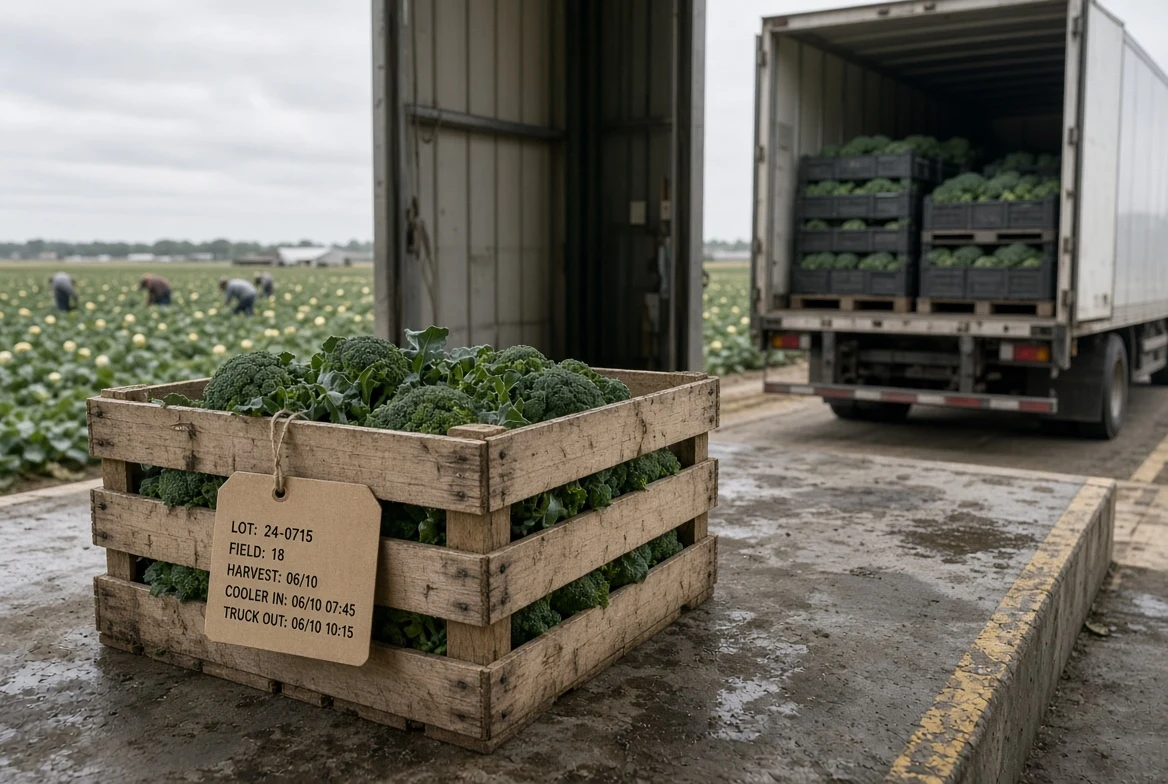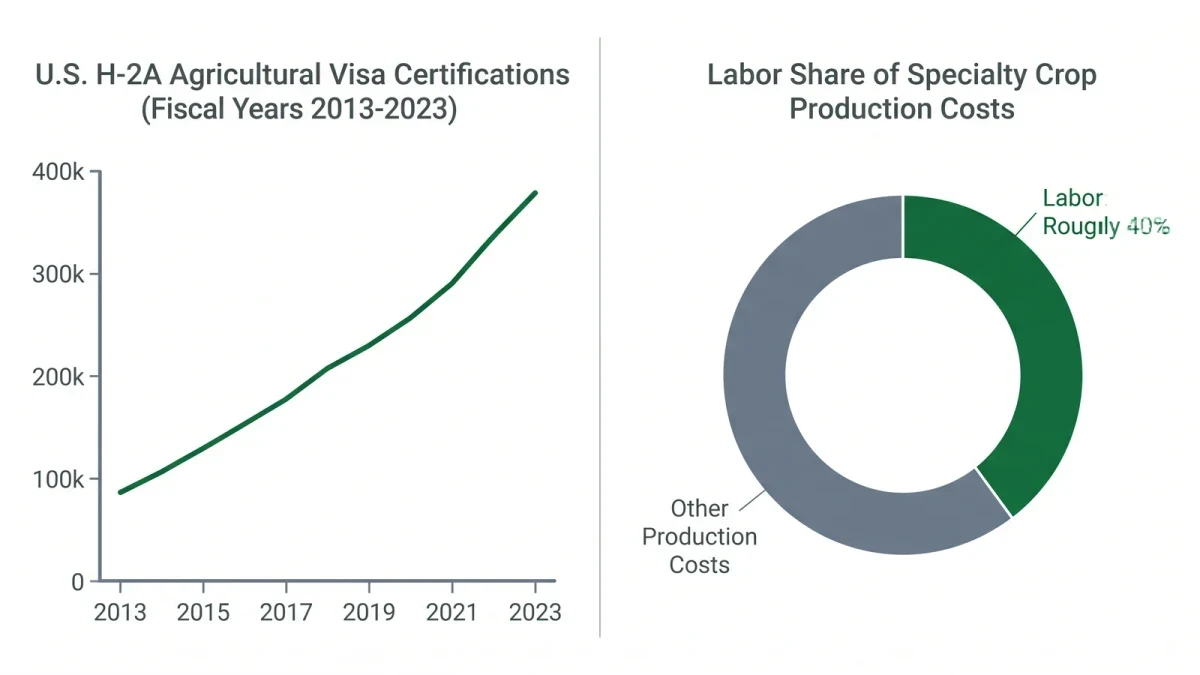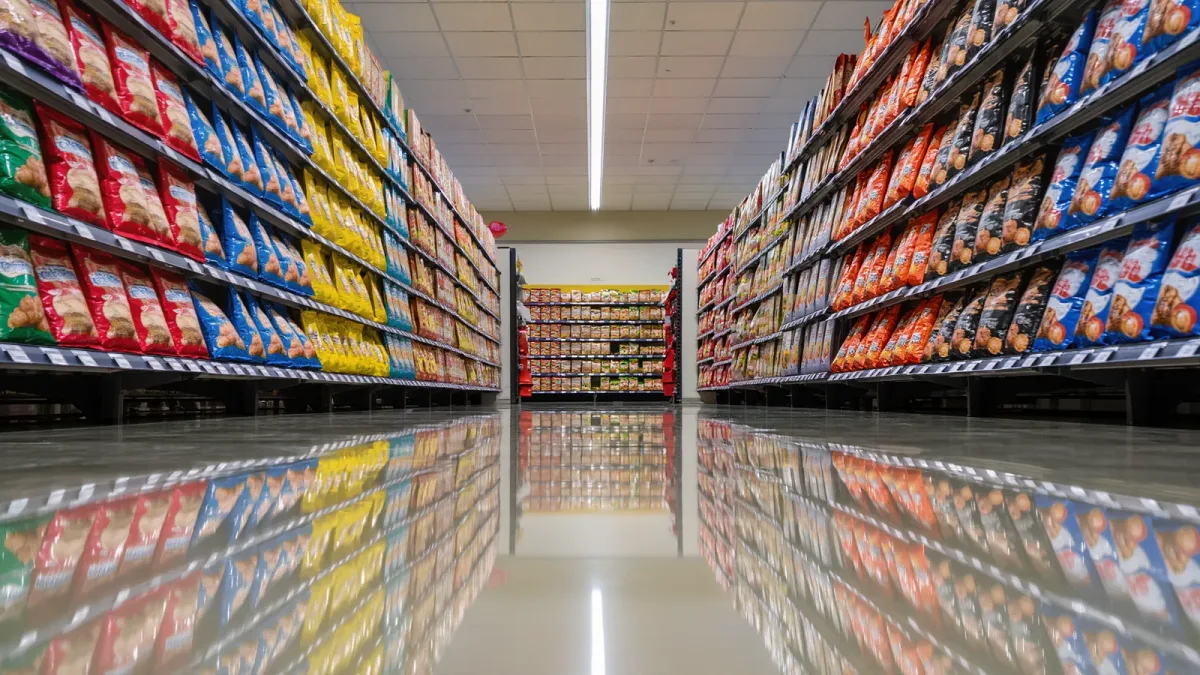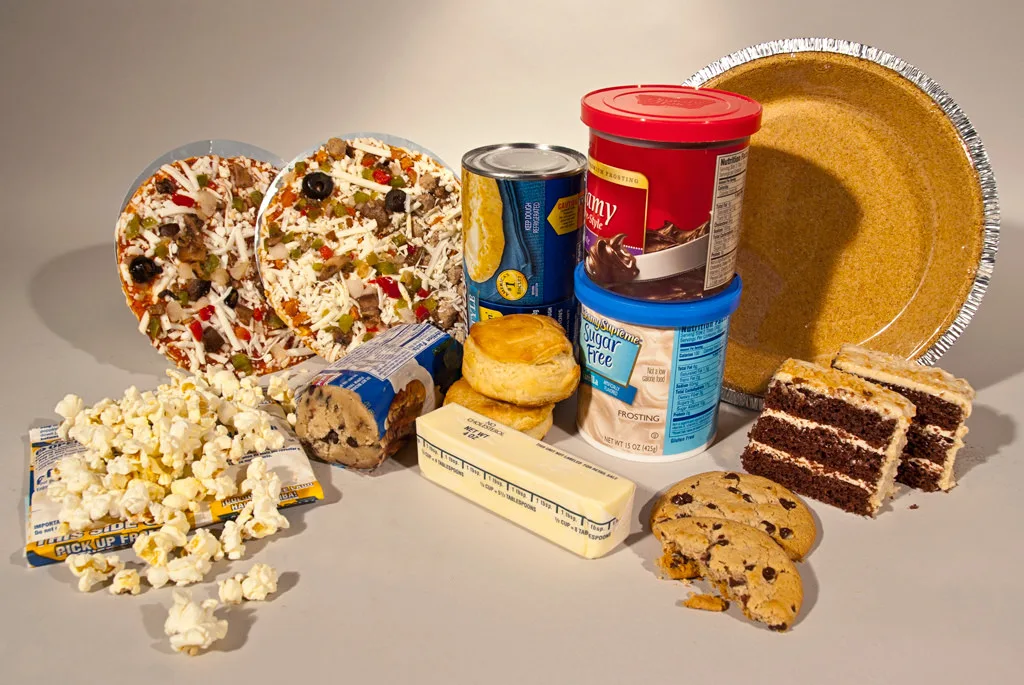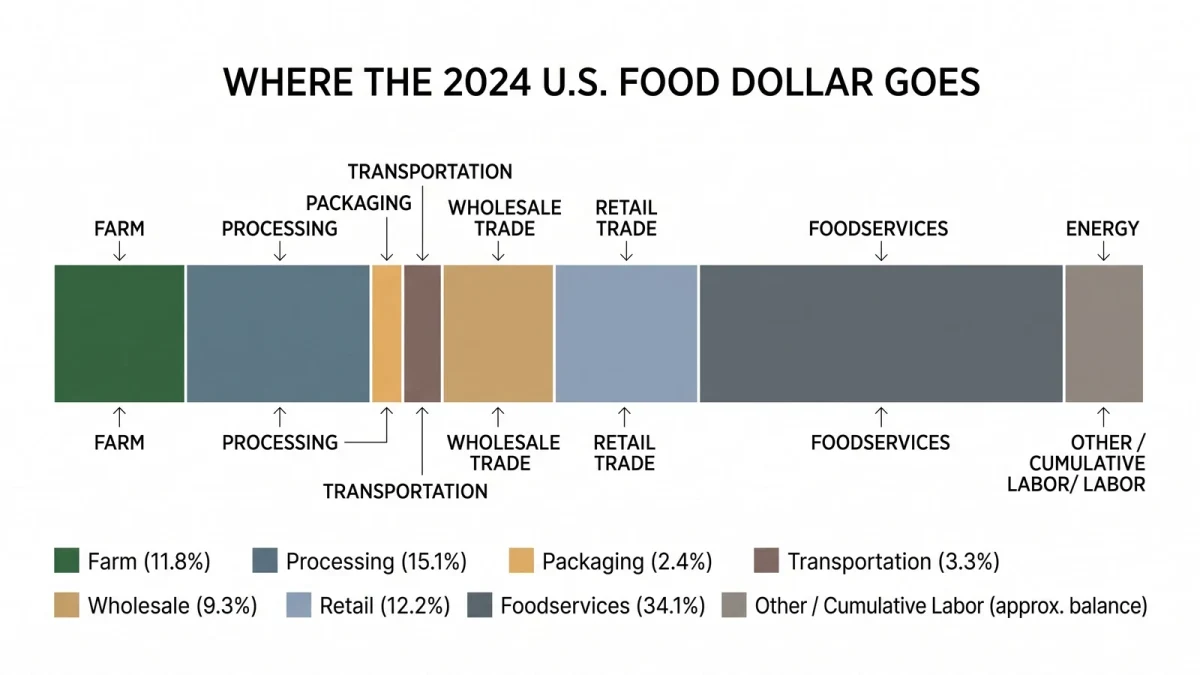
Ingredients are a minority of the cost of most processed food. U.S. farm establishments received 11.8 cents of every dollar of domestic food spending in 2024, per the USDA Economic Research Service's food dollar series, meaning roughly 88 cents paid for processing, packaging, transport, trade margins, labor, and the other work of the supply chain. For heavily processed products specifically, the farm-gate ingredient share runs lower still, because manufacturing, packaging, and branding dominate the cost stack.
This site publishes information, not investment advice. The margin structure of processed food matters to farm readers anyway, because it determines how commodity price moves reach the shelf, why food companies fight over pennies of packaging, and what kind of ingredient demand growth crop producers can realistically expect.
What are the main cost buckets in a processed food product?
Every boxed, bagged, canned, or frozen food carries four big buckets. The first is the ingredient bill, the farm and intermediate product costs, which the ERS food dollar series pegs at the farm share plus the first-stage processing margin. The second is the conversion cost: labor, energy, depreciation, and maintenance inside the plant. The third is packaging, which for many products costs more than the food inside it. The fourth is everything downstream, distribution, retail margins, trade promotion, and marketing, which in the food dollar's primary-factor view shows up as the dominant share of the consumer dollar.
Two structural facts follow. Retail trade and food services absorb the largest combined block of the consumer food dollar, and labor costs across all stages outweigh any single material input. That is why wage inflation in processing, trucking, and stores moved grocery prices in 2022 through 2024 more persistently than the commodity spike did.
How do processors actually make their margin?
Processors earn a spread between the cost of converting ingredients into product and the price the retail channel pays, and that spread is managed in basis points. The levers are standard manufacturing economics: capacity utilization, because a plant running at 90 percent spreads fixed costs thinner than one at 60 percent; input hedging, locking grain, oil, and protein costs forward; formulation, reformulating within the label's constraints when an input spikes; and trade spend, the promotions and slotting payments that determine whether the product moves at retail.
The documented pattern in the 2023 through 2025 earnings season was margin recovery: large packaged food companies rebuilt gross margins after the 2022 input shock through pricing, mix, and cost programs, then faced volume softness as shoppers traded toward private label, per company earnings reports and trade press coverage of the period. Margin and volume traded places, which is the classic processed food cycle.
Why do retail prices stick when ingredient costs fall?
Because ingredients are the smallest big line. If the farm share of the all-food dollar is 11.8 cents, then even a 20 percent fall in farm-level ingredient costs only relieves about 2 cents of a dollar whose other 88 cents did not fall. Retail prices are set by the whole cost stack plus competitive dynamics, and the non-farm stack, labor, packaging, energy, and margins, kept its own inflation through the same period.
Sticky prices also have a behavioral component. Consumer packaged goods companies reset prices infrequently, and retailers resist cost-driven price cuts because shelf prices anchor shopper perception. The result, visible in the ERS series across years, is that the farm share falls when commodity prices fall, while the marketing bill share absorbs the difference rather than passing it fully to consumers.
Where does farm demand actually show up?
For crop producers, the processed food channel is a volume business with slow growth and strict specifications. Grain goes in as flour, starch, sweetener, and feed-through products; oilseeds as oil and meal protein; dairy and eggs as ingredients across baking and prepared foods. Demand growth in these channels tracks population and per-capita consumption, with occasional step changes from formulation shifts, the last large one being the high-fructose corn syrup displacement by other sweeteners over decades.
The premium opportunities sit one step beyond commodity: identity-preserved crops, protein concentrates, and specialty starches, where the processor pays for specification, traceability, and consistency rather than bushels alone. Those channels pay better precisely because they carry the processor's own margin protection, a guaranteed specification reduces their reformulation risk.
What does this mean for reading food company announcements?
When a food manufacturer announces a cost program, a reformulation, or a price increase, the margin structure tells you where it lands. Cost programs target conversion and overhead, the middle buckets. Reformulations target the ingredient bill, usually the cheapest lever per basis point of margin. Price increases target the only bucket that is not a cost at all, the consumer's dollar, and they work only until private label or a rival holds price.
For operators selling into these channels, the practical conclusions are: expect ingredient demand to be steady, specified, and slow-growing; expect your price moves to have limited effect on shelf prices, and therefore limited elasticity response; and capture premium where specification, not volume, is what the buyer is shopping for. The margin structure is not a secret, but it is the layer of the food system most often left out of farm-level price discussions, and it is the layer that sets the ceiling on what ingredients can ever be worth.