A county fairground is not a seasonal attraction. It is a piece of public infrastructure that hosts youth livestock sales, equipment expos, seed and input meetings, and commodity gatherings through the whole calendar. The fair week itself is the visible peak. The commerce underneath it runs all year.
That distinction matters for anyone who treats the fair as a marketing line item. The grounds are usually held or overseen by a county-level government body, which means access, scheduling and cost are governed by local rules, not by a promoter's whim. Understanding who controls the facility is the first step to using it well.
Who actually runs a fairground?
In most states the county is the operating unit, and the governance varies. Louisiana is a useful illustration of how local that variation can be. The state is divided into 64 parishes, and, according to the Louisiana parish map and county list published by Whereig, 41 of the 64 are governed by an elected body called the Police Jury, while the rest use a parish president, council-manager or commission form. The same local-body principle applies to fairgrounds elsewhere: the entity with the authority is a county board, an agricultural society, or a dedicated fair association, and each sets its own rental terms and event calendar.
What this means in practice: the counterparty for a winter equipment clinic or a spring input meeting is rarely the fair board you meet at the fair. It is the governing body behind it, and the paperwork goes through that office.
What happens at a fairground between fairs?
The off-season calendar is where the ag commerce lives. Typical uses include:
- Youth livestock sales and showing clinics, which connect 4-H and FFA families with buyers, feed dealers and veterinary suppliers.
- Equipment expos and dealer days, where manufacturers and local dealers put iron in front of buyers who would otherwise drive hours to a dealership.
- Input and marketing meetings hosted by cooperatives, extension services and commodity groups.
- Auctions, consignment sales and trade days, which move used equipment and breeding stock between neighbors.
Each of these is a transaction venue. A fairground gives buyers and sellers a neutral, known location with parking, pens, arenas and grandstand seating already built. That is infrastructure a small town cannot duplicate cheaply, which is why the grounds stay booked long after the midway closes.
Why the youth livestock sale is a business event
The junior livestock auction looks ceremonial, and part of it is. But the money is real and the buyer list is a who's-who of local agribusiness. Feed stores, banks, implement dealers and processors bid on animals, and the premium money flows back to the young sellers. For the businesses bidding, it is relationship spending with a visible return: their name is spoken over the loudspeaker in front of the families who will buy their products for decades.
For the sellers, the sale is often a first lesson in price discovery. Weight classes, per-pound pricing and add-on premiums mirror the mechanics of a terminal market in miniature. Readers who want the grown-up version of those price mechanics can see how grain basis works and why it swings by region; the fair ring teaches the same lesson, that the posted price and your price are not the same thing. For related coverage, see Industry news today: How to read a commodity market report like an analyst.
Equipment expos and the local dealer economy
Equipment is the heaviest commerce the grounds carry. An expo puts tractors, planters and hay tools where farmers can walk around them, and it lets dealers take orders in a setting with less overhead than a showroom. In an industry where the equipment sales downturn has deepened into a third year, that low-cost selling channel matters more, not less. Dealers watching inventory costs use fairground events to move demonstration units and meet buyers without carrying the expense of a permanent second location. This connects to our earlier piece, Ag equipment sales downturn deepens into a third year.
The same logic applies on the service side. Parts vendors, tire dealers and repair shops book booth space because the crowd is pre-qualified. Nobody wanders a farm expo by accident.
What this means for your farm business
Our analysis: treat the fairground calendar as a distribution channel, and plan for it the way you would plan any other marketing spend. The practical steps are unglamorous.
First, find out who governs the grounds and when the booking window opens. Popular off-season dates go early, and the governing body — a county board, an agricultural society, or in Louisiana's case something like a Police Jury — sets the rules. Second, price the event against the alternative. Booth fees, sponsorships and buyer-group dinners are cheaper than most advertising, but only if the people you need actually attend. Third, for youth sale buyers, decide your bid strategy before the ring. Premiums and floor bids both buy goodwill; know which one fits your budget.
One caution, offered as information rather than legal advice: sponsorship and naming agreements at publicly held grounds can involve local-government contracting rules. Read the agreement before signing, and get counsel for anything beyond a simple booth reservation.
The fairground as rural infrastructure
Step back and the fairground is one of the few remaining pieces of shared rural commercial infrastructure. Grain elevators, sale barns and co-op buildings each serve one trade. A fairground serves all of them, plus the community events that keep the facility funded between seasons. Where those grounds are well governed and well used, they function as the town's year-round marketplace; where they sit idle ten months a year, the commerce — and the young people learning it — tends to drift to larger towns.
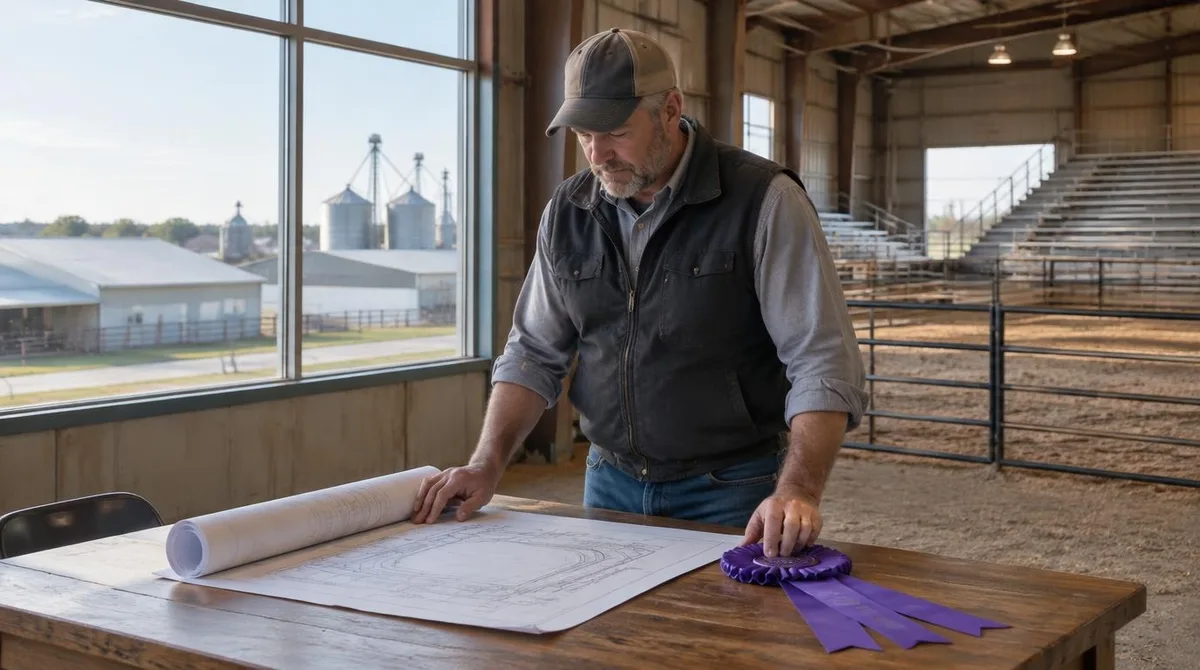
The ribbon winners get the photograph. The transactions, the bookings and the buyer relationships are the economy. Operators who plan for the full calendar, not just fair week, are the ones who get the value out of it.