Repair laws now reach the farm shop. Colorado's HB23-1011 took effect on January 1, 2024. It makes a farm equipment maker share parts, tools, software, and repair manuals. The duty covers owners and independent shops alike, and a refusal counts as a deceptive trade practice under the state's law.
This explainer sorts the rules for the shop and the field. It covers the new state law, the federal layers, warranty paper, the industry deal, and the limits. Sources sit in each sentence, with regions and dates.
What does the new Colorado law require?
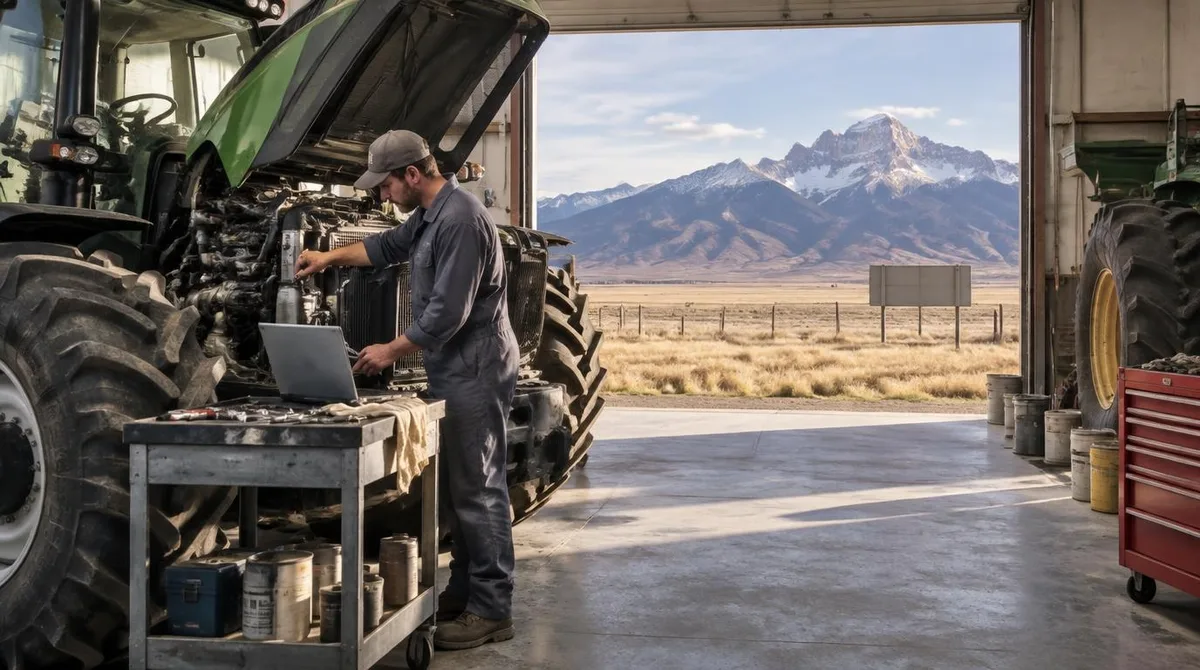
The act speaks plainly. From January 1, 2024, farm equipment makers must share parts, tools, and repair materials. That list reaches embedded software, firmware, and diagrams. Diagnostic and repair manuals fall under the same duty, per the act's official summary. The duty runs to owners and independent repair providers alike. A maker who fails to provide the resources commits a deceptive trade practice.
The act also folds farm equipment into the state's existing consumer repair statutes. It adds data to the list of resources a maker must hand over, per the same summary. Readers following this should also see Ag equipment sales downturn deepens into a third year.
What does federal law already allow?
Federal rules stack on top. The Library of Congress extended repair exemptions in 2021, with favorable terms for agricultural vehicles. A 2018 change let owners of land-based vehicles hire third parties for software work. The American Farm Bureau Federation backed that change, per the repair-movement reference. The FTC added its weight in May 2021. Its report to Congress, Nixing the Fix, took on repair limits in consumer protection and competition terms, per the agency's report page.
What about warranty paper at the dealer?
Warranty rules lean the same way. In April 2018, the FTC warned six makers that some warranty terms may break the Magnuson-Moss Warranty Act. The firms spanned cars, electronics, and game consoles. Terms that void coverage over third-party parts or shops count as deceptive, unless the maker provides free warranty service or parts, per the same reference. The stated fix is simple. Honor the warranty or supply the parts for free, and the terms can stand.
What did the industry agree to on its own?
John Deere moved first. In January 2023, the firm signed a memorandum of understanding with the American Farm Bureau Federation. It says American farmers can fix their own machines or use independent repair shops in the United States, per the same reference. Farmers on that path stay bound against divulging certain confidential information. Colorado's act adds a backstop. A signed memorandum does not lift a maker's duties under the law.
Trade groups had drafted their own terms before that. The Association of Equipment Manufacturers and the Equipment Dealers Association issued joint repair principles in 2018, per the reference.
Where do the new rights stop?
The act draws four lines. Repairs may not shut off a safety alert system. They may not push equipment out of line with safety or emissions rules. They may not serve as a way around emissions, copyright, trademark, or patent law. The act also sunsets if Congress passes federal repair legislation, per the official summary. The lines protect the safety case, the emissions stack, and the patent file. We covered a connected angle in How tractor emissions rules got where they are.
How did the debate reach the farm?
The road came first. Massachusetts passed the first state repair law for cars in 2012. It required car makers to sell the same service materials and diagnostic data to independent shops, per the reference. Auto trade groups signed a 2014 memorandum that carried the model to all 50 states for the 2018 model year. Machines in the field gained computers, and the fight followed. Makers lobbied against some repair bills, John Deere among them, per reporting carried in the reference. Colorado's governor signed the farm law on April 25, 2023, and the argument became a duty.
Conclusion: the paperwork now comes with the wrench
Repair rights now sit on paper. Colorado's law puts parts, software, tools, and manuals behind a legal duty from January 1, 2024. Federal exemptions cover farm vehicles, and a 2023 industry deal opened the shop door next to the dealer one. The rights carry limits on safety, emissions, and patents. The direction, though, is set in statutes, not in folklore. For an operator, the change reads as a parts counter that must answer, with a state law behind the answer.